09Sep

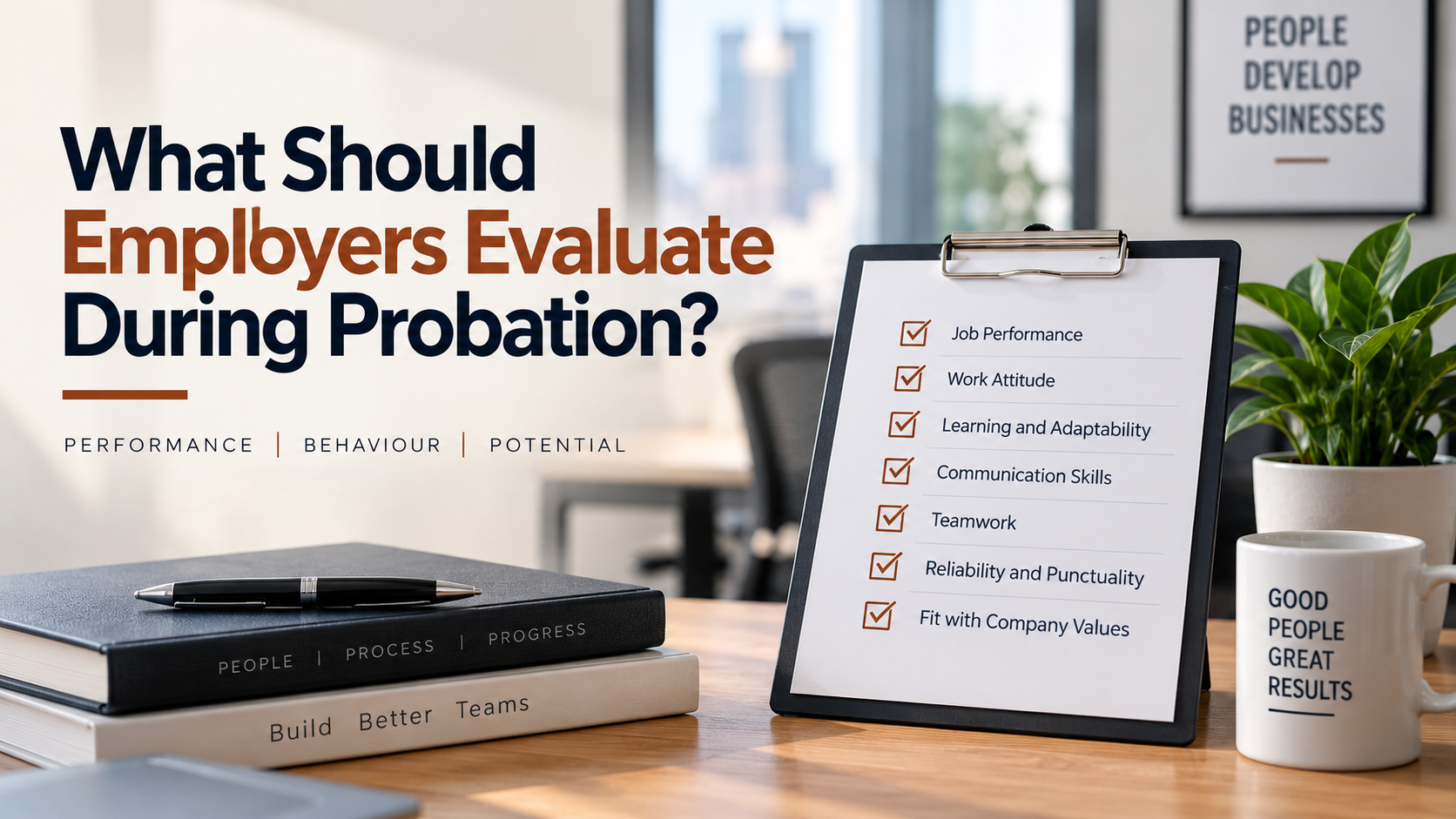
What Should Employers Evaluate During Probation?

An employee can have the right qualifications, impressive experience and perform well during an interview — but that doesn’t always tell you how they will perform once they join the organisation.
This is where probation becomes important.
It gives employers the opportunity to see the employee in the real working environment and answer a much bigger question:
“Is this person truly the right fit for the role?”
But making that decision requires more than simply looking at whether tasks are being completed.

  1. Performance and Quality of Work

The first question is simple: Is the employee able to deliver what the role requires?
Employers should look at the quality of work, accuracy, productivity, ability to meet deadlines and consistency.
One good week should not determine the assessment. What matters is the employee’s performance over time and whether they are improving as they become more familiar with the role.

  1. Attendance and Punctuality

An employee may have excellent technical skills, but reliability matters too.
Are they consistently present when expected? Do they arrive on time? Do they communicate appropriately when they will be absent or delayed?
Attendance and punctuality can provide important insight into an employee’s reliability and professionalism.

  1. Attitude and Professionalism

Skills can be developed, but attitude can have a significant impact on the workplace.
Employers should observe how the employee responds to feedback, interacts with colleagues, handles responsibility and conducts themselves at work.
A new employee does not need to know everything immediately. What matters is whether they demonstrate professionalism, respect and a willingness to learn.

  1. Adaptability and Willingness to Learn

Every organisation has its own systems, processes and way of working.
A new employee may need time to adjust. The important question is whether they are willing to learn and adapt.
Do they ask questions when they don’t understand something? Do they apply feedback? Are they able to adjust when processes change?
An employee who learns from mistakes and improves over time may demonstrate more potential than someone who performs well initially but refuses to grow.

  1. Teamwork and Communication

An employee does not work in isolation.
Their ability to communicate, collaborate and build healthy working relationships can directly affect team performance.
Employers should consider how the employee communicates with colleagues, responds to different opinions, handles disagreements and contributes to the team.

  1. Overall Suitability for the Role

Ultimately, probation should help the organisation answer a bigger question:
“Is this person the right fit for this role and our working environment?”
This does not mean looking for someone who is perfect.
It means considering whether the employee has the ability, attitude and willingness to develop into the role successfully.
An employee may have areas that require improvement, but if they respond positively to feedback and demonstrate consistent progress, that should form part of the assessment.

Don’t Wait Until the End of Probation
One of the biggest mistakes employers can make is waiting until the final week of probation to assess performance.
By then, it may be too late to address concerns effectively.
Assessment should happen throughout the probation period. Managers should provide regular feedback, recognise good performance and address concerns early.
This gives the employee a genuine opportunity to improve and gives the employer a clearer and more objective basis for making a confirmation decision.

02Sep

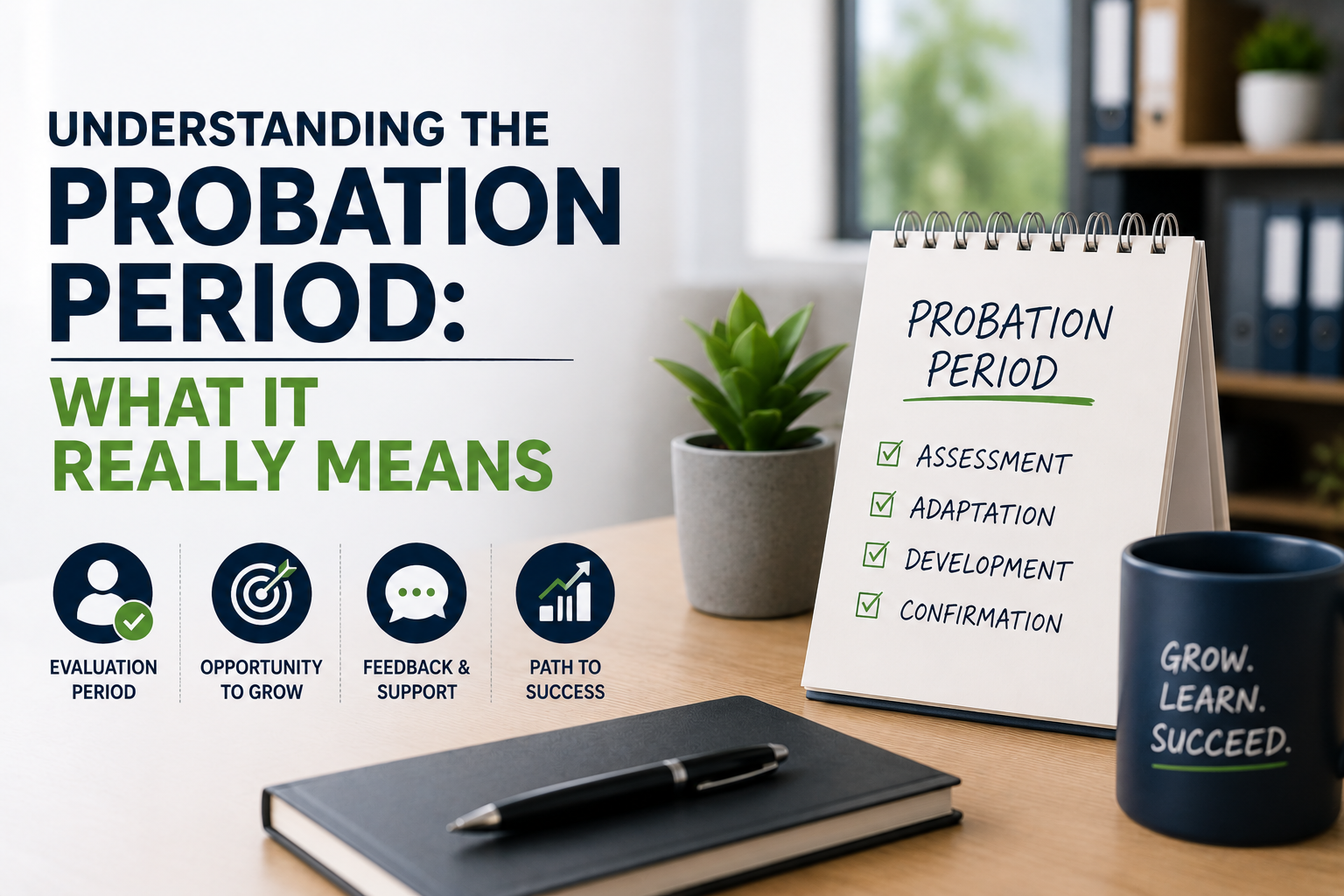
Understanding the Probation Period: What It Really Means

Starting a new job often comes with a probation period. For some employees, it feels like a period of uncertainty — “Will I be confirmed?” For some employers, it is simply a period to observe whether the new hire is suitable for the role.
But probation should be more than just a waiting period.
A probation period is an opportunity for both the employer and the employee to determine whether the employment relationship is working as expected. It gives the organisation time to assess the employee’s performance, conduct, skills and overall suitability for the role, while giving the employee the opportunity to understand the organisation, settle into the role and demonstrate what they can contribute.

What Is a Probation Period?

A probation period is an initial period of employment during which an employee’s performance and suitability for a role are assessed before a decision is made about confirmation.
The exact duration varies between organisations and employment contracts. What matters is that the purpose and expectations of the probation period should be clear from the beginning.
Probation should not mean that an employee is expected to simply “prove themselves” without guidance. Employers should clearly communicate what success looks like, what responsibilities the employee is expected to handle and the standards they are expected to meet.

What Should Employers Be Assessing?

Probation is not only about asking whether an employee can do the technical aspects of the job.
Employers should look at the bigger picture.
This may include the quality and consistency of the employee’s work, ability to meet deadlines, attendance and punctuality, communication, professionalism, teamwork, willingness to learn and ability to adapt to the organisation’s processes and expectations.
For example, an employee may have excellent technical skills but consistently arrive late, struggle to work with colleagues or ignore established procedures. On the other hand, another employee may need some additional training but demonstrate a strong work ethic, willingness to learn and significant improvement over time.
This is why probation should involve continuous assessment, rather than one final judgement at the end.

Probation Is Also a Learning Period for the Employee

While employers are assessing employees, employees are also assessing the organisation.
The probation period allows a new employee to understand the company’s culture, leadership style, expectations, systems and working environment. It is also a period for the employee to determine whether the role is aligned with what was communicated during recruitment.
This is important because probation is not designed to benefit only the employer.
A new employee should be able to ask questions, seek clarification, receive feedback and understand where improvement is required. They should not have to wait until the last week of probation to discover that their performance has not met expectations.

The Problem With Treating Probation as a Waiting Period

One of the biggest mistakes organisations can make is treating probation as something that happens automatically.
An employee joins the organisation, receives little or no feedback, continues working for several months and then suddenly hears, “You have not met expectations.”
That approach creates uncertainty and can make the assessment feel unfair.
If there are performance or conduct concerns, they should be addressed during the probation period. Employees should know what they are doing well, where they need to improve and what is expected of them going forward.
Similarly, employees should not assume that simply completing the probation period automatically means they have performed satisfactorily. Confirmation should follow the organisation’s established process and the terms of the employment relationship.

What Makes a Good Probation Period?

A well-managed probation period should have three things: clear expectations, regular feedback and proper assessment.
From the beginning, the employee should understand their responsibilities and the standards expected of them. Managers should provide feedback throughout the period rather than waiting until the end. HR and management should also maintain appropriate records of performance, attendance, feedback and any areas requiring improvement.
Most importantly, the process should be fair and consistent.
Probation should not be used to keep employees in a prolonged state of uncertainty or to create unrealistic expectations. It should be a structured period that helps both sides make an informed decision about the future of the employment relationship.

Conclusion

Probation is not simply the period before an employee receives a confirmation letter. It is the foundation of the employment relationship.
When properly managed, it gives employers a structured opportunity to evaluate new hires and gives employees the support and clarity they need to succeed.
The real question during probation should not simply be, “Will this employee pass?”
It should be:
“Have we given this employee a fair opportunity to understand the role, demonstrate their ability, receive feedback and succeed?”
That is what makes probation meaningful — not just for the organisation, but for the employee too.