
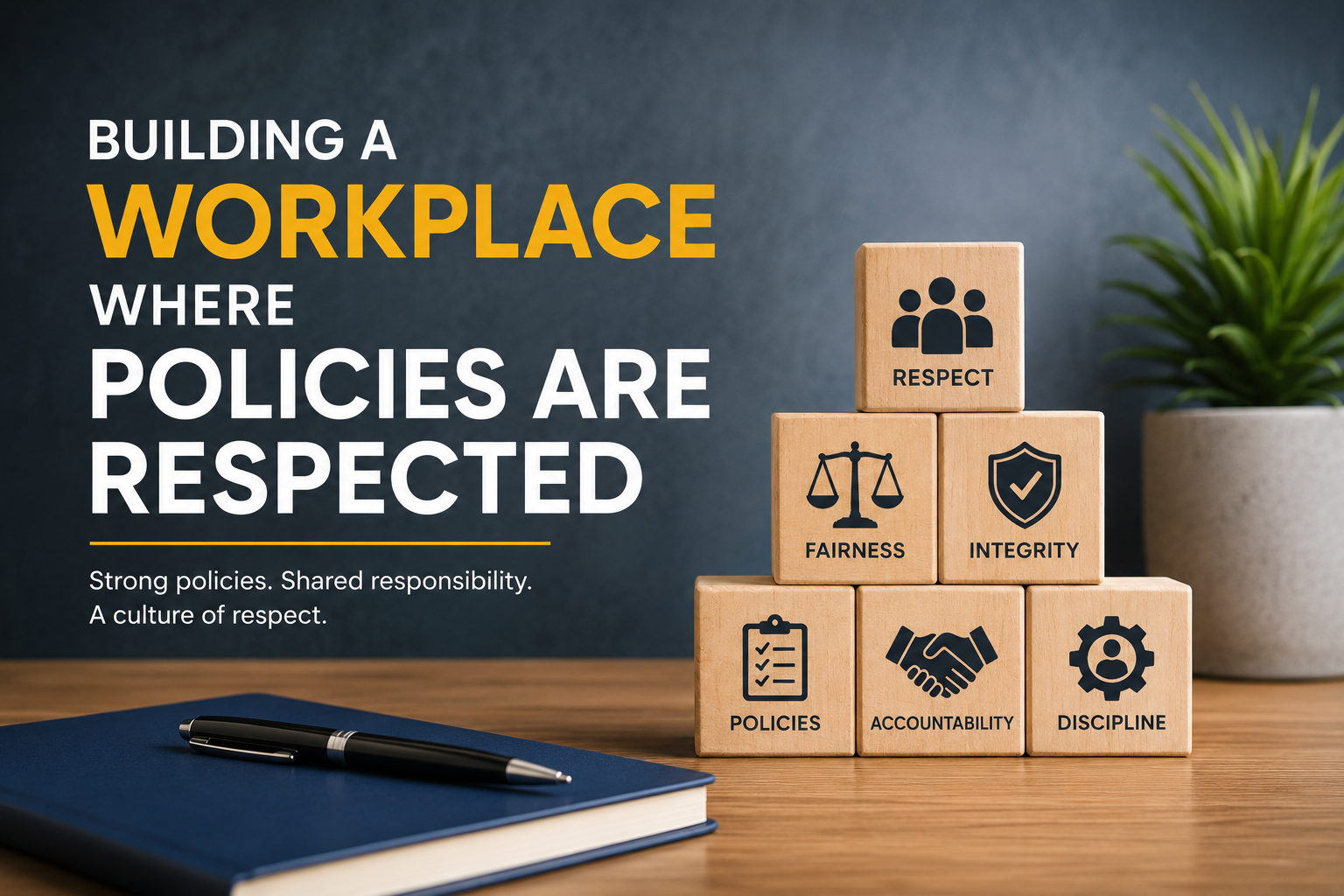
Having workplace policies is important, but having employees respect those policies is what makes them effective.
A policy can be well-written and legally sound, but if employees don’t understand it, don’t see it as fair, or see it applied differently from person to person, it can quickly lose its value.
The goal is not simply to have employees follow rules because they are afraid of consequences. It is to create a workplace where employees understand why the rules exist and trust the way they are applied.
Make Policies Part of the Employee Experience
Policies should not only come up when an employee has done something wrong.
Employees interact with workplace policies throughout their employment—from attendance and leave to performance, conduct, grievances, and disciplinary matters.
Regular communication, simple explanations, and easy access to policies help employees understand what is expected of them and where to go when they have questions.
Train Managers to Apply Policies Properly
A good policy can quickly lose its credibility when managers apply it differently.
Managers need to understand not only what a policy says, but how to apply it fairly and consistently. They should know when to handle an issue themselves and when to involve HR.
Employees are more likely to respect policies when they see that managers are also taking them seriously.
Create Room for Questions and Feedback
Employees will not always agree with every workplace policy, and that’s okay.
Giving employees an opportunity to ask questions or raise concerns can help organizations identify policies that may be unclear, difficult to follow, or no longer relevant.
Listening does not mean management must accept every suggestion. It simply shows employees that their experiences matter.
Review Policies as the Organization Evolves
Workplaces change. Businesses grow, teams change, technology develops, and the way people work evolves.
Policies should therefore be reviewed regularly to ensure they still make sense for the organization and the people working in it.
A policy that worked perfectly five years ago may need to be adjusted today.
Build Respect, Not Fear
Employees may follow rules because they fear punishment, but that does not necessarily mean they respect the organization.
Long-term respect is built through fairness, consistency, transparency, and leadership by example.
When employees see that policies apply fairly, concerns are handled professionally, and management follows the same standards expected of employees, trust grows.
Conclusion
Creating workplace policies is only the beginning. The real value comes from how those policies are communicated, implemented, and experienced by employees.
Employees don’t just pay attention to what the policy says. They pay attention to how it is applied.
When policies are clear, fair, and consistently implemented, employees are more likely to understand them, respect them, and take responsibility for following them.
The goal isn’t to create a workplace where employees fear the rules. It’s to create one where they trust the fairness behind them.