
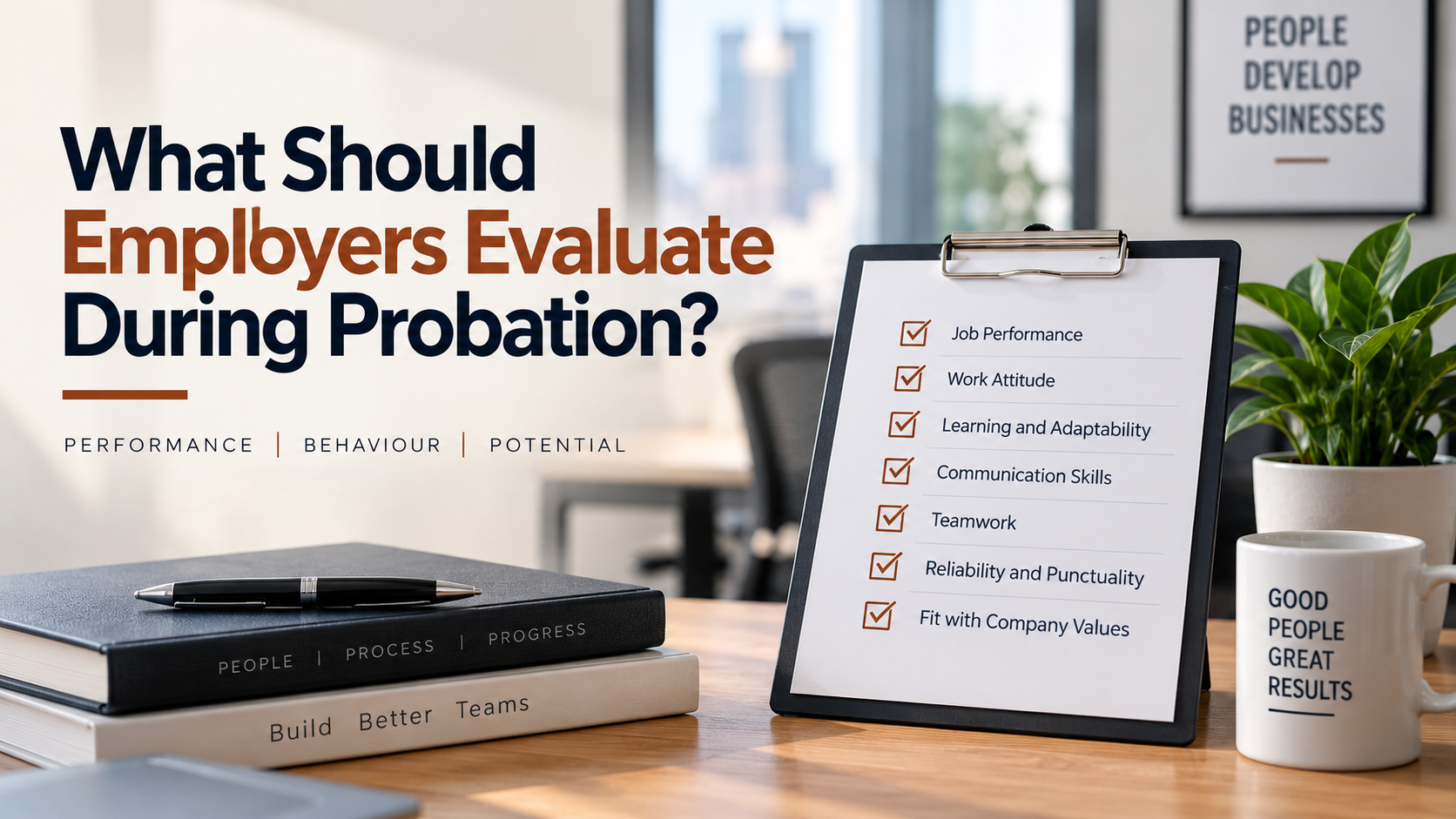
An employee can have the right qualifications, impressive experience and perform well during an interview — but that doesn’t always tell you how they will perform once they join the organisation.
This is where probation becomes important.
It gives employers the opportunity to see the employee in the real working environment and answer a much bigger question:
“Is this person truly the right fit for the role?”
But making that decision requires more than simply looking at whether tasks are being completed.
- Performance and Quality of Work
The first question is simple: Is the employee able to deliver what the role requires?
Employers should look at the quality of work, accuracy, productivity, ability to meet deadlines and consistency.
One good week should not determine the assessment. What matters is the employee’s performance over time and whether they are improving as they become more familiar with the role.
- Attendance and Punctuality
An employee may have excellent technical skills, but reliability matters too.
Are they consistently present when expected? Do they arrive on time? Do they communicate appropriately when they will be absent or delayed?
Attendance and punctuality can provide important insight into an employee’s reliability and professionalism.
- Attitude and Professionalism
Skills can be developed, but attitude can have a significant impact on the workplace.
Employers should observe how the employee responds to feedback, interacts with colleagues, handles responsibility and conducts themselves at work.
A new employee does not need to know everything immediately. What matters is whether they demonstrate professionalism, respect and a willingness to learn.
- Adaptability and Willingness to Learn
Every organisation has its own systems, processes and way of working.
A new employee may need time to adjust. The important question is whether they are willing to learn and adapt.
Do they ask questions when they don’t understand something? Do they apply feedback? Are they able to adjust when processes change?
An employee who learns from mistakes and improves over time may demonstrate more potential than someone who performs well initially but refuses to grow.
- Teamwork and Communication
An employee does not work in isolation.
Their ability to communicate, collaborate and build healthy working relationships can directly affect team performance.
Employers should consider how the employee communicates with colleagues, responds to different opinions, handles disagreements and contributes to the team.
- Overall Suitability for the Role
Ultimately, probation should help the organisation answer a bigger question:
“Is this person the right fit for this role and our working environment?”
This does not mean looking for someone who is perfect.
It means considering whether the employee has the ability, attitude and willingness to develop into the role successfully.
An employee may have areas that require improvement, but if they respond positively to feedback and demonstrate consistent progress, that should form part of the assessment.
Don’t Wait Until the End of Probation
One of the biggest mistakes employers can make is waiting until the final week of probation to assess performance.
By then, it may be too late to address concerns effectively.
Assessment should happen throughout the probation period. Managers should provide regular feedback, recognise good performance and address concerns early.
This gives the employee a genuine opportunity to improve and gives the employer a clearer and more objective basis for making a confirmation decision.